Damaged cartilage barely regenerates. National Science Review reports an injectable 3D stem-cell assembly that may approach full structural recovery in one month.
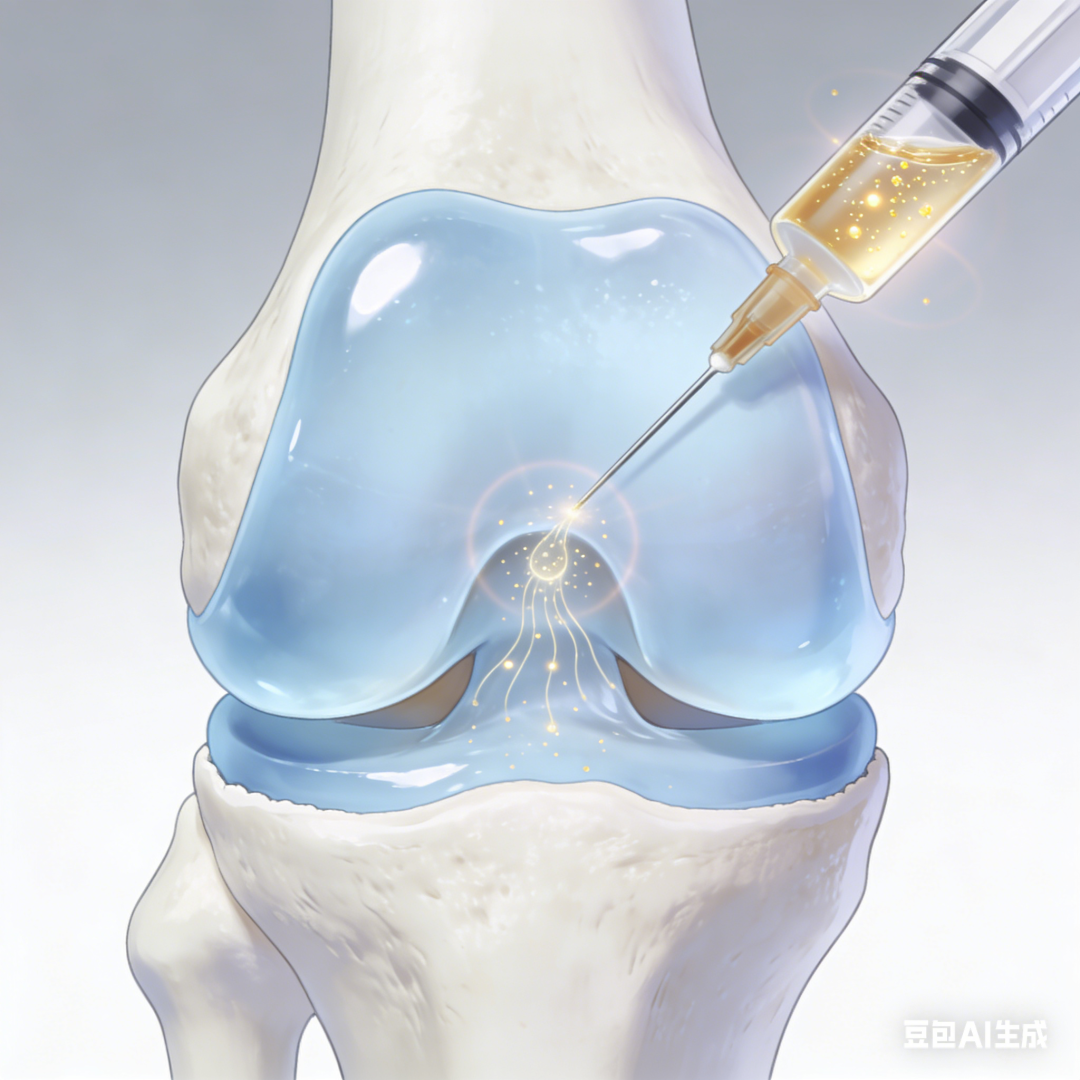
Damaged cartilage has no regenerative capacity — the fundamental reason bone-and-joint disease is so hard to cure. A paper in National Science Review (impact factor 17.275) reports that scientists built a 3D stem-cell assembly that can be injected into a cartilage defect. It assembles rapidly in vitro, fills the defect and promotes stem-cell differentiation towards cartilage, helping to repair even extreme cartilage loss.
Articular cartilage reduces friction between bone, acting as a smooth, elastic buffer that cuts unnecessary vibration and impact.
Cartilage, however, has almost no ability to regenerate. As age and wear increase, bone rubs on bone for long periods, causing pain and inflammation, and eventually joint degeneration — even loss of the ability to move.
Surgical options for cartilage injury are limited, and mostly aim at short-term pain relief. Stem-cell tissue engineering, by contrast, has shown great potential for rapid cartilage repair, opening a new opportunity.
Stem-cell therapy still has key obstacles to overcome: oxidative stress and inflammation are common in the injured microenvironment, and stem cells often undergo apoptosis after injection.
To meet these challenges, a team led by Professor Zhang Qiuyu of Northwestern Polytechnical University and Professor Ki-Bum Lee of Rutgers University developed a 3D IHI nanoscaffold-templated stem-cell assembly system for advanced 3D culture and implantation. Through mechanical support, growth-factor delivery, immune modulation and better in-vivo integration, it advances stem-cell repair of cartilage with clear advantages.
The study was published in National Science Review (NSR) and attracted wide attention.
Previous stem-cell trials have posted encouraging results, but key obstacles remain.
In this study, scientists developed a method based on a 3D injectable hybrid inorganic (IHI) nanoscaffold, combining the advantages of scaffold-free and scaffold-based tissue engineering to strengthen stem-cell treatment of cartilage injury.
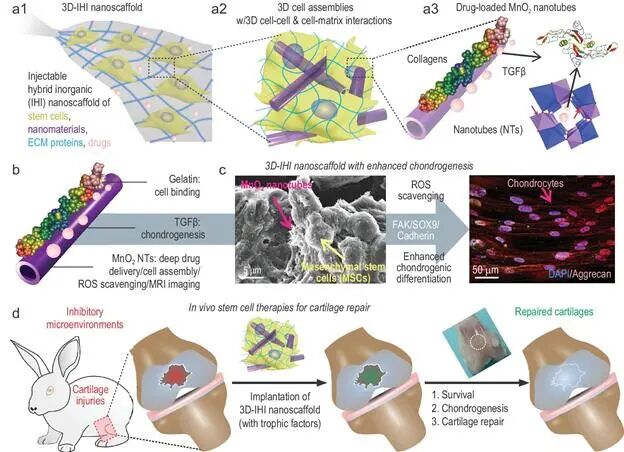
Notably, the 3D-IHI nanoscaffold rapidly assembles stem cells into 3D tissue with controllable cell–cell interaction, raising survival and chondrogenic differentiation, and delivering chondrogenic factors evenly throughout the assembled cells.
The addition of biodegradable nanomaterials not only markedly sped up 3D assembly, but also integrated cell–cell and cell–matrix interaction and deep delivery of a drug (TGF-β3) into the 3D-IHI nanoscaffold, to regulate BMSC chondrogenesis effectively in vitro and in vivo.
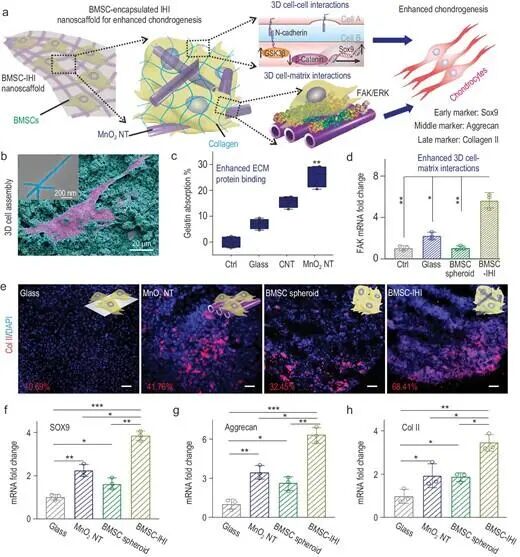
Injecting the stem-cell-assembled 3D-IHI nanoscaffold into injured cartilage in a rabbit model of severe defect markedly reduced inflammation and improved stem-cell survival and chondrogenesis, promoting cartilage regeneration and long-term functional recovery.
The platform’s strong performance in controlling stem-cell fate in vitro and in vivo suggests great potential for accelerating cartilage regeneration and for other tissues with low regenerative capacity.
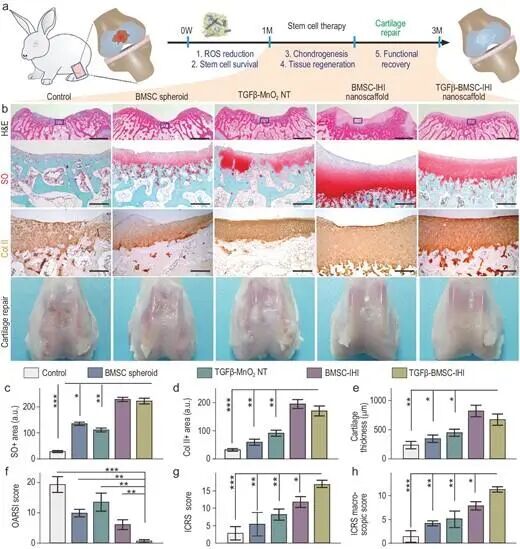
To study longer-term effect, the researchers also ran cell-transplantation assays at 1, 2 and 3 months after treatment under the same experimental and control conditions. All time points showed significant improvement in articular-cartilage defect repair, and a slowing of osteoarthritis progression.
Notably, as early as one month, the injured cartilage in the experimental group had become smooth, approaching complete structural recovery.
Cartilage injury is often devastating, mainly because the tissue itself has almost no regenerative capacity. Once cartilage is worn away, related bone-and-joint disease is very hard to cure.
With the rise of regenerative medicine, stem-cell technology has made cartilage repair a research focus. Some mesenchymal stem-cell (MSC) approaches have already produced encouraging results.
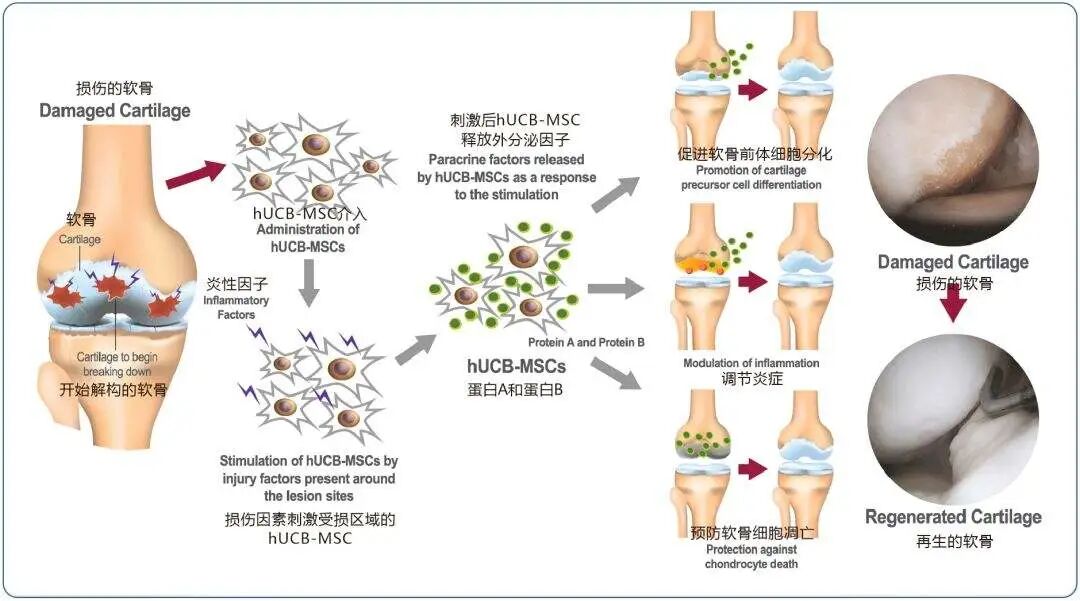
Why do such small cells have such “power”, enough to give cartilage once thought untreatable a chance to grow again? The answer lies in the properties of stem cells themselves.
First, stem cells have multilineage potential. Under specific inductive conditions in vitro or in vivo they can become osteocytes or chondrocytes, repairing damaged bone tissue directly.
Second, they have a paracrine function. By secreting many active factors they can induce their own differentiation towards chondrocytes, and by regulating multiple signalling pathways and cytokines they can inhibit chondrocyte apoptosis, slow local inflammation and promote the tissue’s own repair.
Third, they modulate immunity — secreting immunosuppressive cytokines and directly regulating immune-cell differentiation, thereby suppressing inflammation. Mesenchymal stem cells can also act on several types of immune cell through the immunomodulatory factors they express, to an anti-inflammatory end.
With these functions, stem cells have already posted solid clinical results in articular cartilage. The 3D culture system in this study takes the technology further still, and may open new ground in developmental biology, disease modelling and regenerative medicine — and a new chance of cure for cartilage-injury disease.
More than 300 million people worldwide live with arthritis. In Asia, as many as one in six people will have this leading cause of disability at some stage of life. The arrival of stem-cell regenerative medicine is not accidental; deeper work on the technology will also bring hope to more patients with arthritis.
Reference: Wang, S., et al. (2022) Injectable hybrid inorganic nanoscaffold as rapid stem cell assembly template for cartilage repair. National Science Review. doi.org/10.1093/nsr/nwac037
Medical disclaimer: This article is for general educational reference on longevity medicine, life science and genetic technology only. It does not constitute any diagnosis, treatment or medical advice. These fields are evolving rapidly; the content is compiled from publicly available educational material for information only and does not represent a commitment to any treatment, technology or outcome. Individual circumstances vary; actual treatments, results and potential risks may differ. Please consult a qualified clinician and follow their professional assessment and recommendations.