Of 11 pivotal trials chosen by Nature Medicine, four involve cells or stem cells. Cell therapy is moving from strong concept towards harder evidence.

On 15 December 2025, Nature Medicine published its year-end survey, “Eleven clinical trials that will shape medicine in 2026”. Drawing on the judgement of leading researchers, it selected 11 pivotal trials, from different fields, thought likely to influence the direction of medicine in 2026.
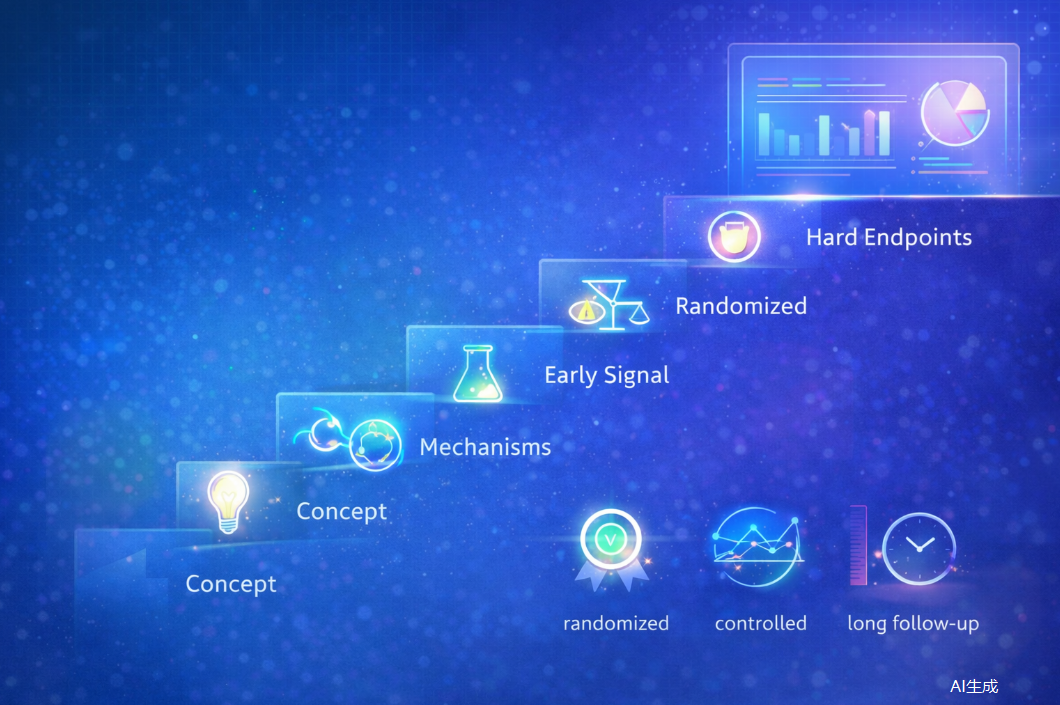
Of these, four involve cells and stem cells (including cell plus gene editing) — about one third, or roughly 36%. Taken on their own, the trend is clearer: cell therapy is moving from “strong concept” towards “harder evidence” — using more standard trial design and clearer clinical endpoints to write efficacy and reproducibility into the data.

If the signal still reproduces stably in a randomised, double-blind, placebo-controlled phase 3 in 2026, the “engineered path” of CAR-T in autoimmune disease will have been written in.
What is it?
Descartes-08 follows an mRNA CAR-T logic: mRNA puts T cells on a “temporary posting” rather than a permanent rewrite. The core aim is to make immune clearance more controllable and more repeatable.
How far has it come?
Phase 2b already has public updates; more important, the phase 3 AURORA study is listed in the registry (for adults with generalised myasthenia gravis).
Why watch it?
The core tension in autoimmune disease is often long-term suppression alongside long-term side effects. If mRNA CAR-T can turn “deep remission” into a reproducible result, it offers not only a new therapy but a new form of immunotherapy: short-course intervention, controllable engineering, and a longer stretch of symptom stability.
The 2026 questions are whether editing accuracy, stability of haematopoietic reconstitution, and durability of clinical benefit can hold up in more cases and longer follow-up.
What is it?
PM359 is a combination of gene editing and cell reinfusion: the patient’s own CD34+ haematopoietic stem cells are taken out, the defect is corrected in vitro with prime editing, then the cells are returned. The aim is long-term recovery of immune function, while avoiding matching and rejection issues of allogeneic transplant.
How far has it come?
It is registered as a phase 1/2 study. Early human data in this direction have also been published in the NEJM, a high-quality endorsement that prime editing has entered the clinic and produced evidence of functional recovery.
Why watch it?
CGD is rare, but the study reads more like a methodological milestone. If prime editing can form a reproducible loop of “correct — reconstitute — benefit”, it may move from a single success to a transferable platform (more genetic defects, more cell types).

The 2026 question is whether phase 3 results with overall survival (OS) as the primary endpoint can give off-the-shelf cell immunotherapy a clear, comparable clinical coordinate.
What is it?
Bria-IMT takes an off-the-shelf cell-immunotherapy route: the product is not “made one-by-one for each patient”, but supplied in a more standardised way. By carrying multi-antigen information and combining with an immune-checkpoint inhibitor, it tries to “wake and organise” anti-tumour immunity.
How far has it come?
The phase 3 BRIA-ABC trial is registered, mainly asking whether overall survival can be extended. It enrols patients across all breast-cancer subtypes, including those with brain metastases or multiple prior treatment failures.
Why watch it?
For many cell therapies the hard part is not “can it be done” but “can it be delivered at scale”. If the off-the-shelf route can show an advantage on a hard endpoint such as OS, the field will find it easier to treat as a reproducible product rather than a small-scale experiment.

The 2026 question is whether “subjective improvement” can be settled into more unified scales and more objective endpoints, so that neural repair moves from narrative towards a stronger form of evidence.
What is it?
NEST uses autologous bone-marrow-derived cells, delivered by a combination of intravenous and nasal routes, to explore effects on neural function and potential repair value.
How far has it come?
In the registry it sits on an exploratory path. The trial has already treated about 200 patients; many reported symptom improvement after treatment.
Why watch it?
The clinical gap in neurological disease is huge, and so is the risk of being amplified by a “hope narrative”. What will decide whether it can move forward are two more concrete things: whether delivery actually reaches the target, and whether endpoints are unified enough to compare. 2026 looks more like a watershed: whether more structured data can turn an exploratory signal into evidence that can be discussed.
Researchers say the results may bring hope and a better quality of life for patients with amyotrophic lateral sclerosis (ALS), Alzheimer’s disease, Parkinson’s disease and stroke.

Taken together, the four trials are doing the same thing: making cell therapy look more like an “engineered product” in modern medicine, rather than something driven only by case-by-case stories.
The shared trend is concentrated:
What is most worth watching in 2026 is not “who looks more like a miracle”, but whether these routes can write efficacy and reproducibility into stricter, more comparable data.
Source: Mike May. Eleven clinical trials that will shape medicine in 2026 (Published: 15 Dec 2025), BriaCell Therapeutics Corp.
Medical disclaimer: This article is for general educational reference on longevity medicine, life science and genetic technology only. It does not constitute any diagnosis, treatment or medical advice. These fields are evolving rapidly; the content is compiled from publicly available educational material for information only and does not represent a commitment to any treatment, technology or outcome. Individual circumstances vary; actual treatments, results and potential risks may differ. Please consult a qualified clinician and follow their professional assessment and recommendations.