From treating disease to managing ageing: the shift is from one-off projects to data-driven, lifelong care that lengthens healthspan — years lived in good function.
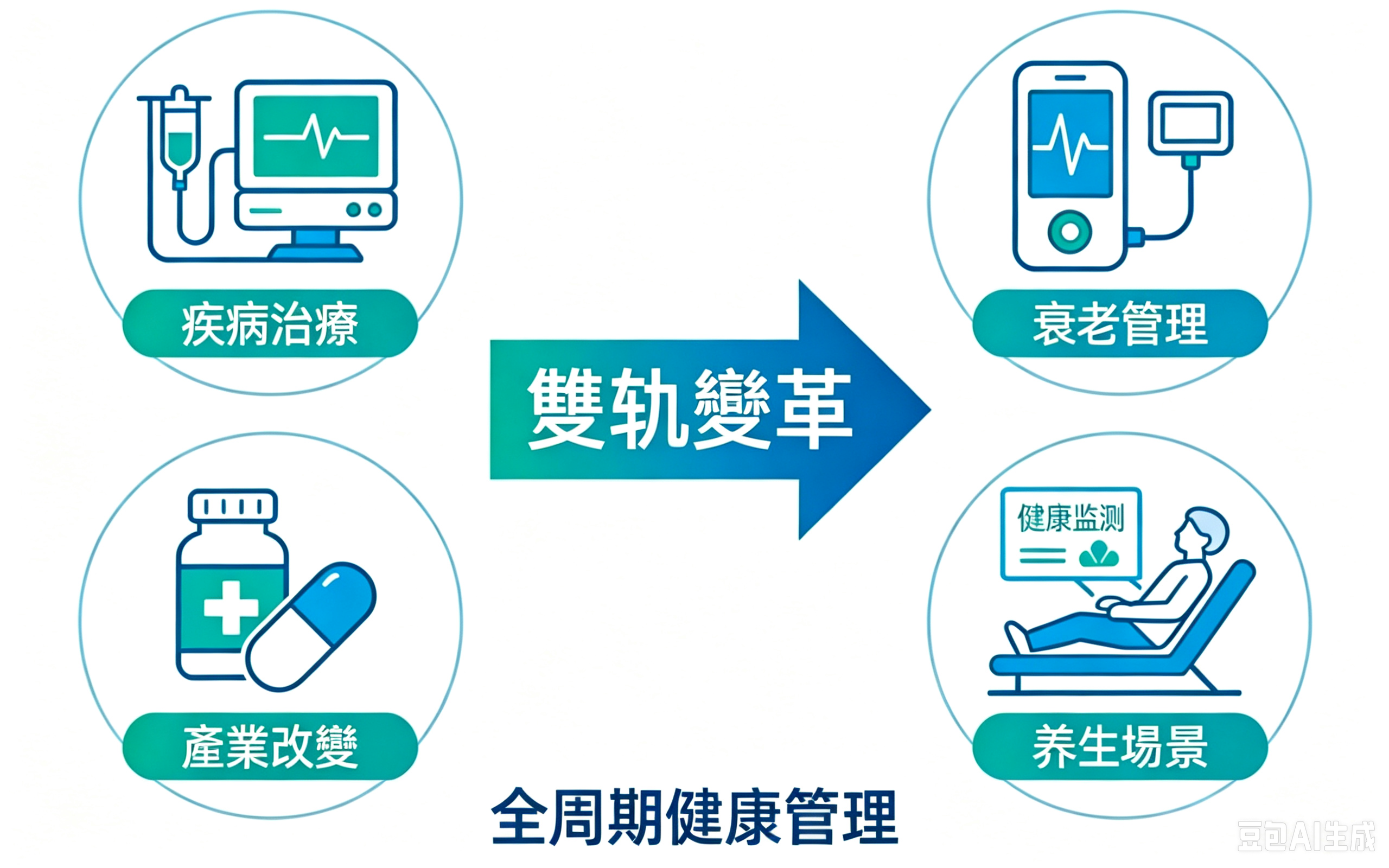
From treating disease to managing ageing: longevity medicine’s core move is to upgrade one-off “project sales” into data-driven, whole-cycle care — assess precisely, intervene continuously, and lengthen years lived in good function.
The era of “add years to life and stop there” is over. Extending healthspan — the years a person can keep function and live independently — is now among the most urgent questions in an ageing society. That shift forces a rethink of disease-centred care and pulls demand toward ageing management: services that can be measured, followed and individualised, not a single transaction.
Demographic ageing and a turn from passive treatment to active anti-ageing also make the borders with neighbouring fields worth drawing clearly. The three contrasts below — timing, depth, and tools — set longevity medicine apart from geriatric care, aesthetic anti-ageing, and preventive traditional-medicine paths.
Geriatric care emphasises comprehensive assessment and multimorbidity, mainly after 60. Longevity medicine looks from about 30 onward, with health intervention at the centre — extending healthspan, not only treating diseases already present. Confusing the two delays action and can miss the better window for modulating ageing.
Aesthetic anti-ageing targets the surface: laxity, wrinkles, a younger-looking skin. Longevity medicine treats inner mechanisms — viscera, immunity, deeper markers — as well as the skin.
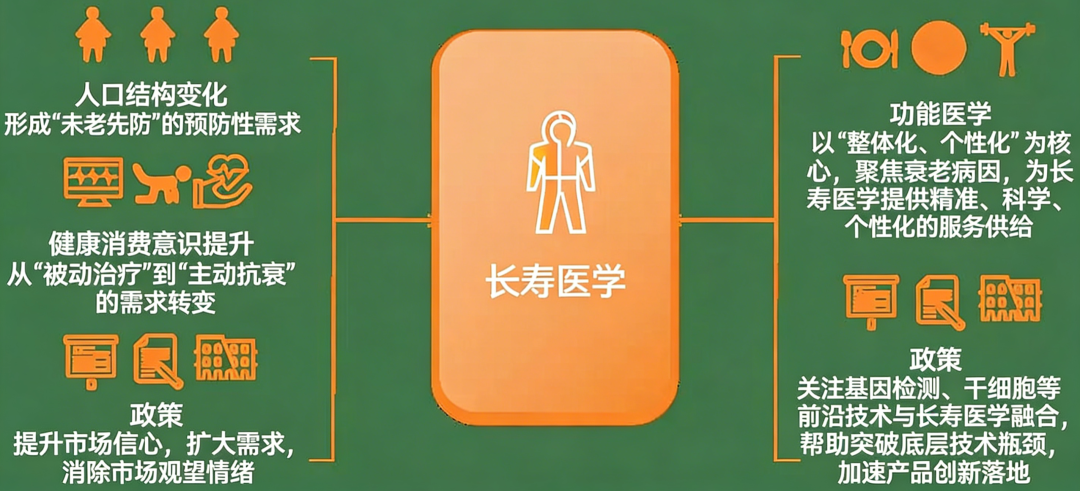
Preventive traditional Chinese medicine rests on herbal medicine, acupuncture and a classical theory of preventing disease. Longevity medicine starts from molecular accounts of cell ageing and telomeres, and draws on multi-omics, regenerative medicine and senescent-cell clearance to measure and slow ageing.
What sets the field apart is treating ageing as an object in its own right — with an ability to assess and intervene on the process that neighbouring disciplines cannot simply substitute.
Medical disclaimer: This article is for general educational reference on longevity medicine, life science and genetic technology only. It does not constitute any diagnosis, treatment or medical advice. These fields are evolving rapidly; the content is compiled from publicly available educational material for information only and does not represent a commitment to any treatment, technology or outcome. Individual circumstances vary; actual treatments, results and potential risks may differ. Please consult a qualified clinician and follow their professional assessment and recommendations.