Knowledge/Periorbital Skin Care: Why Eye Lines Form and How to Improve Them
Eye Care
Periorbital Skin Care: Why Eye Lines Form and How to Improve Them
The skin around the eyes is the thinnest on the body. Understanding why eye lines form, how to care for them properly and which aesthetic options exist helps protect a youthful eye area.
The skin around the eyes is the thinnest on the body. As we age, elastin and collagen are gradually lost, and the periocular skin loses its original firmness and smoothness, forming fine lines and dryness lines under the eyes.
Causes of eye lines
Skin ageing: loss of collagen and elastin is the main cause of periocular ageing
Facial expression: frequent movements such as blinking and frowning produce dynamic wrinkles
Lifestyle: prolonged use of electronic devices increases eye fatigue; lack of sun protection accelerates ageing
Dehydration and inadequate nutrition: lack of moisture around the eyes leads to dryness, making dryness lines more likely to form
Dynamic vs static eye lines
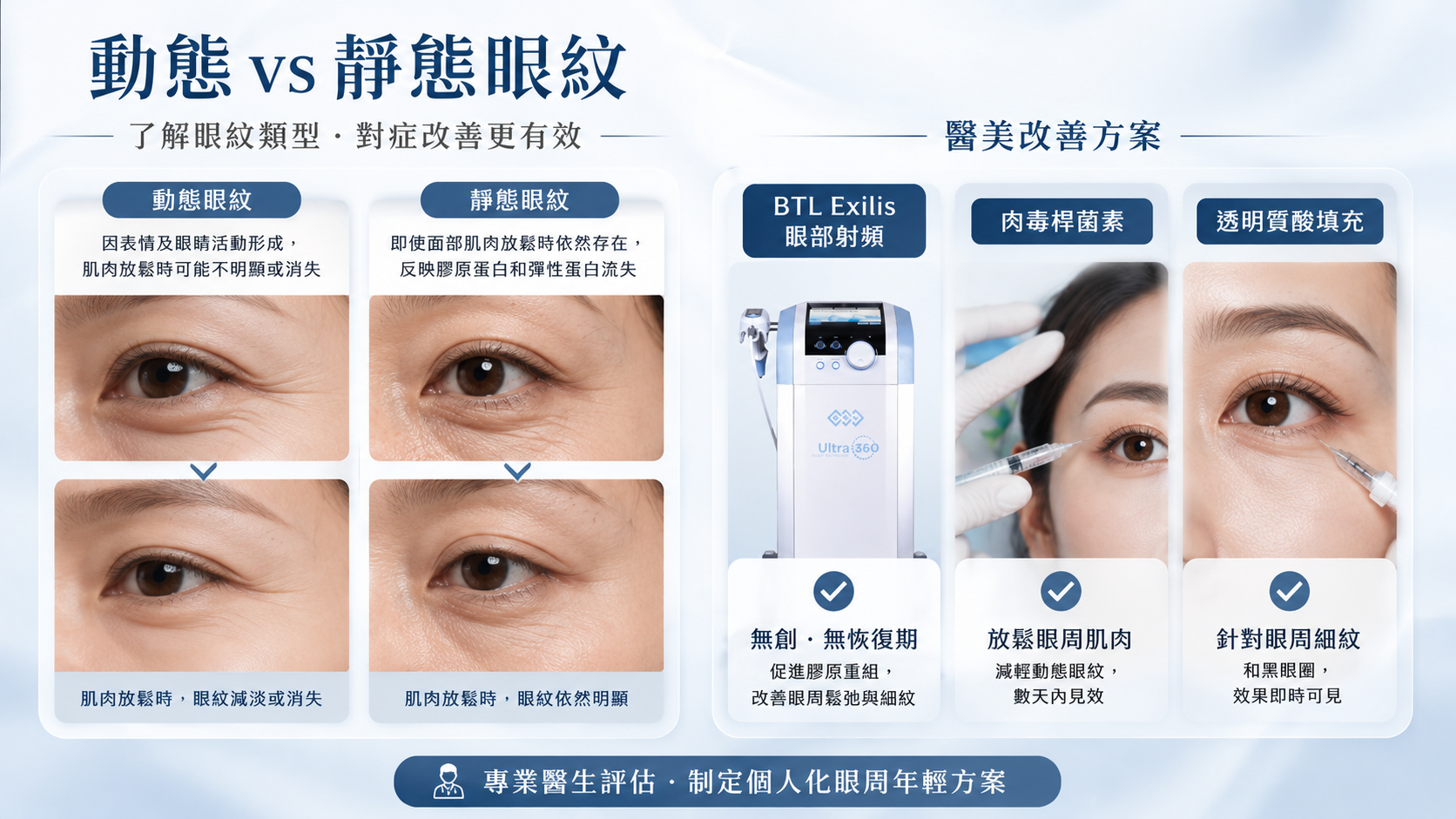
Dynamic eye lines form from expression and eye movement, and may be inconspicuous or disappear when the muscles relax. Static eye lines remain even when facial muscles are relaxed, reflecting ongoing loss of collagen and elastin.
Proper care recommendations
Take in enough water and antioxidant-rich foods every day
Use an eye cream containing vitamin C, vitamin E, hyaluronic acid and similar ingredients regularly
Apply gently, avoiding pulling; use an SPF sunscreen during the day
Get sufficient sleep and reduce prolonged screen staring
Medical aesthetic options
BTL Exilis periocular radiofrequency: non-invasive, no downtime, promotes collagen remodelling, improves periocular laxity and fine lines
Botulinum toxin: relaxes periocular muscles, reduces dynamic eye lines, with results in a few days
Hyaluronic acid filler: for periocular fine lines and dark circles, with immediately visible results